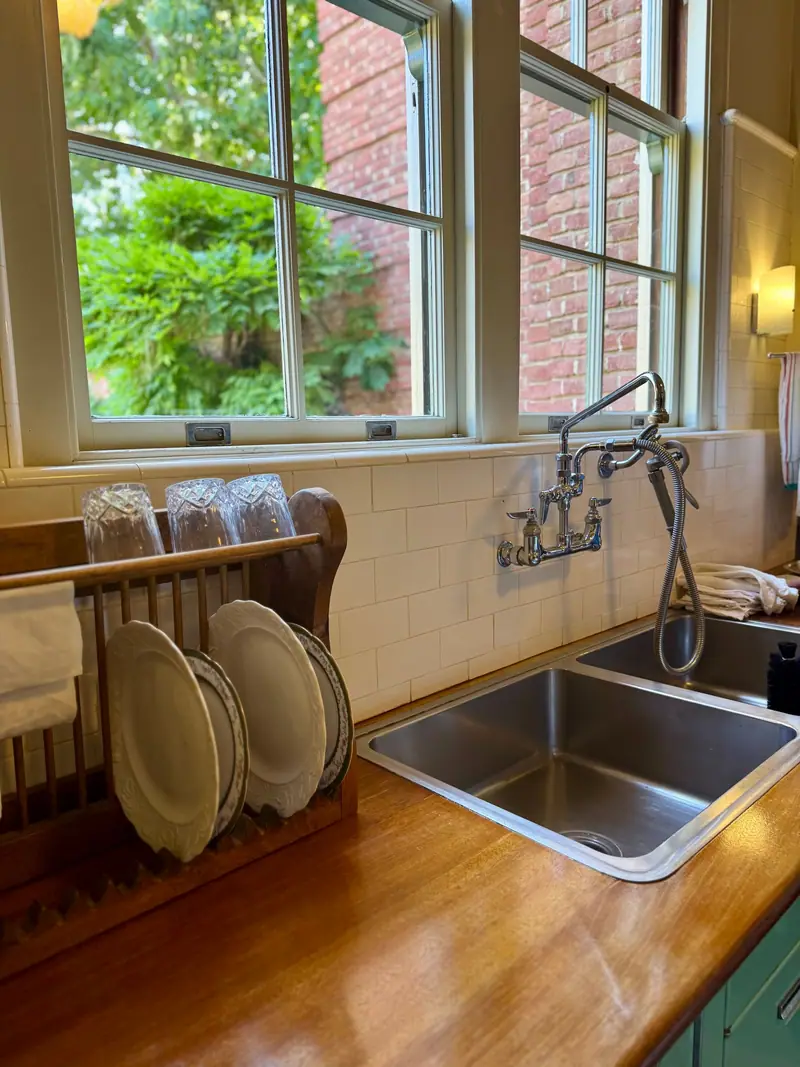
What is really going on behind a slow kitchen sink
A kitchen sink does not usually fail all at once. It slows down for weeks, and the basin takes a little longer to empty each time. By the day it stops completely, the pipe behind the wall has been narrowing for a long while.
Three things do most of the damage. Cooking grease is the first: it leaves the sink as a warm liquid, then cools inside the pipe and coats the walls like candle wax. Starch is the second, and rice, pasta water and potato peelings turn into a paste that grips the grease layer. Food waste ground up in a disposal is the third. It is fine particles, not clean water, and fine particles settle wherever the pipe slopes gently.
None of this is anyone's fault. A kitchen drain carries a bit of everything, and the pipe was sized for a house that cooked differently from the way many households cook now. What matters is recognizing the pattern early and having the line cleared properly, rather than pushing the blockage a few feet further down the pipe.
One side clear, one side full: reading a double sink
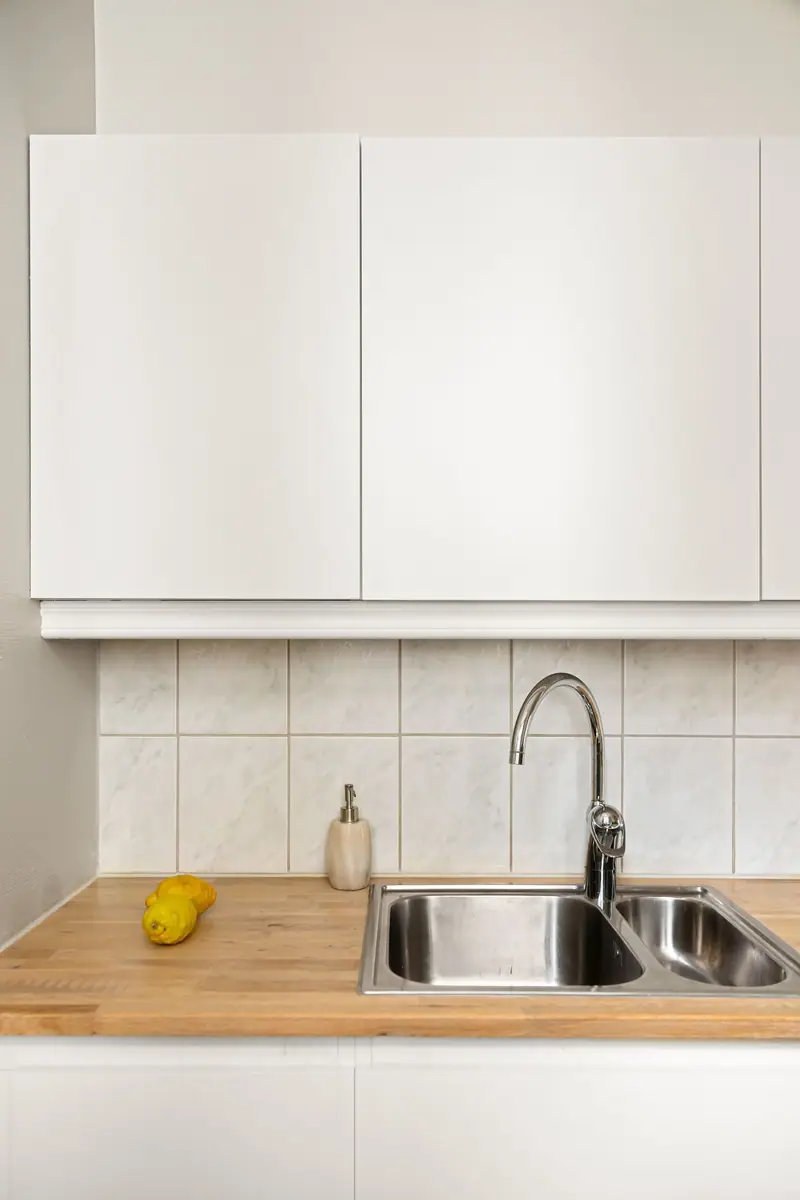
If you have a double sink, the two basins act as a built-in diagnostic. When one side drains and the other holds water, the blockage is usually close, in the tailpiece or the trap under that basin or in the short branch where the two sides join. That is a local problem, and it tends to be quick for a technician to deal with.
When both sides fill, or when water from one side rises into the other, the blockage sits further along the kitchen branch line, past the point where the two drains combine. The same is true if the dishwasher hose is tied in at that point. In that case the job is not under the sink at all. It is in the pipe that runs behind the cabinet and through the wall or floor.
It helps enormously when you tell the dispatcher which of these you are seeing. A short description such as "left basin full, right basin slow, dishwasher ran last night" lets the technician arrive with the right tools instead of discovering the layout on the day.
 Kitchen
When the dishwasher and the disposal join the problem
Dishwasher water rising in the sink basin is one of the clearest signs that the kitchen branch line is restricted. The dishwasher pushes out a surge of water, the pipe cannot carry it away fast enough, and the sink is simply the nearest place for it to go. It looks alarming, but it is the drain telling you where the narrowing is.
A disposal adds its own wrinkle. The unit itself can jam or clog at its outlet, which makes the basin back up even though the pipe beyond it is clear. A technician will usually check the disposal outlet first for exactly this reason. If it is clear, attention moves to the trap and then the branch line.
A word of caution while you wait: if the disposal hums but does not turn, do not reach into it. Leave it alone and let the technician you have dispatched deal with it. When the sink is full of standing water, run nothing else into it.
Clearing the branch line behind the wall
Once the visible parts are ruled out, the work moves into the pipe itself. For a kitchen branch line, the usual tool is a small cable machine with a cutting head sized for the pipe. It travels in through a cleanout or the sink opening, breaks through the build-up and pulls debris back out so it does not simply settle further along.
Where the buildup is mostly heavy grease, a technician may talk you through other options, including a water-powered approach covered on our hydro jetting page. The choice depends on the pipe material, the age of the house and what the technician finds. Nobody should reach for the strongest tool automatically, and a good technician explains why they chose the one they did.
Clearing the line restores flow, but it does not explain why the line clogged. If the same sink slows down again, that repeat pattern is information. It is worth asking about a camera look, because a dip or a rough joint in the pipe can collect grease in the same spot every time.
Kitchen drains in Mount Joy homes
Housing in Mount Joy ranges widely, and the age of the house shapes what lies behind the kitchen wall. In the older brick homes around the borough and Main Street, kitchen lines are often older metal pipe. They are typically rougher on the inside than newer plastic, so grease and starch have more to grip, and a branch line may run a longer, more winding route to the main stack than a modern layout would use.
In the neighborhoods around Donegal Springs and Donegal Heights, you will find a mix of older houses and newer ones. Newer plastic drain lines tend to be smoother and straighter, but they are not immune. A slight sag in a horizontal run, or a joint that sits proud, can start collecting residue and cause the same slow drain.
Winter adds a seasonal note. Cold weather and holiday cooking can overlap, and heavy kitchen use during the colder months is a common time for a marginal drain to give up. If your sink has been slow since autumn, it is worth having it looked at before the busy season rather than during it.
Habits that help, and ones that only sound helpful
Small habits do make a difference, and none of them cost anything. Wipe greasy pans with a paper towel before washing, and put the towel in the bin rather than the sink. Keep a jar for cooled cooking fat and bin it when it is full. Scrape plates into the bin, and treat the disposal as a convenience for small scraps, not a way to clear a dinner plate.
Some popular ideas deserve a skeptical look. Chemical drain cleaners can sit in a stopped pipe, damage it and put the next person who opens the line at risk, so we do not recommend them. Hot water on its own moves grease along instead of removing it. Enzyme and bacterial products have supporters, but they are slow and will not clear a pipe that is already stopped.
The honest summary: good habits slow the build-up, and they will not guarantee the line stays clear. A kitchen drain that has been in use for decades can still need cleaning. Your goal is longer gaps between visits, not none at all.
When a kitchen clog turns out to be something larger
Occasionally the kitchen sink is only where the problem shows up. If the tub gurgles when you run the sink, or a downstairs floor drain bubbles when the dishwasher drains, the blockage is further along the system. Our page on main drain line clearing explains how a technician confirms that, and how it differs from a single-fixture clog.
Likewise, a bathroom that slows down at the same time as the kitchen is worth mentioning on the phone. Read the notes on bathroom sink, tub and shower drains to see how those lines behave, and describe everything you have noticed. The more complete the picture, the more likely the first visit solves the real problem.